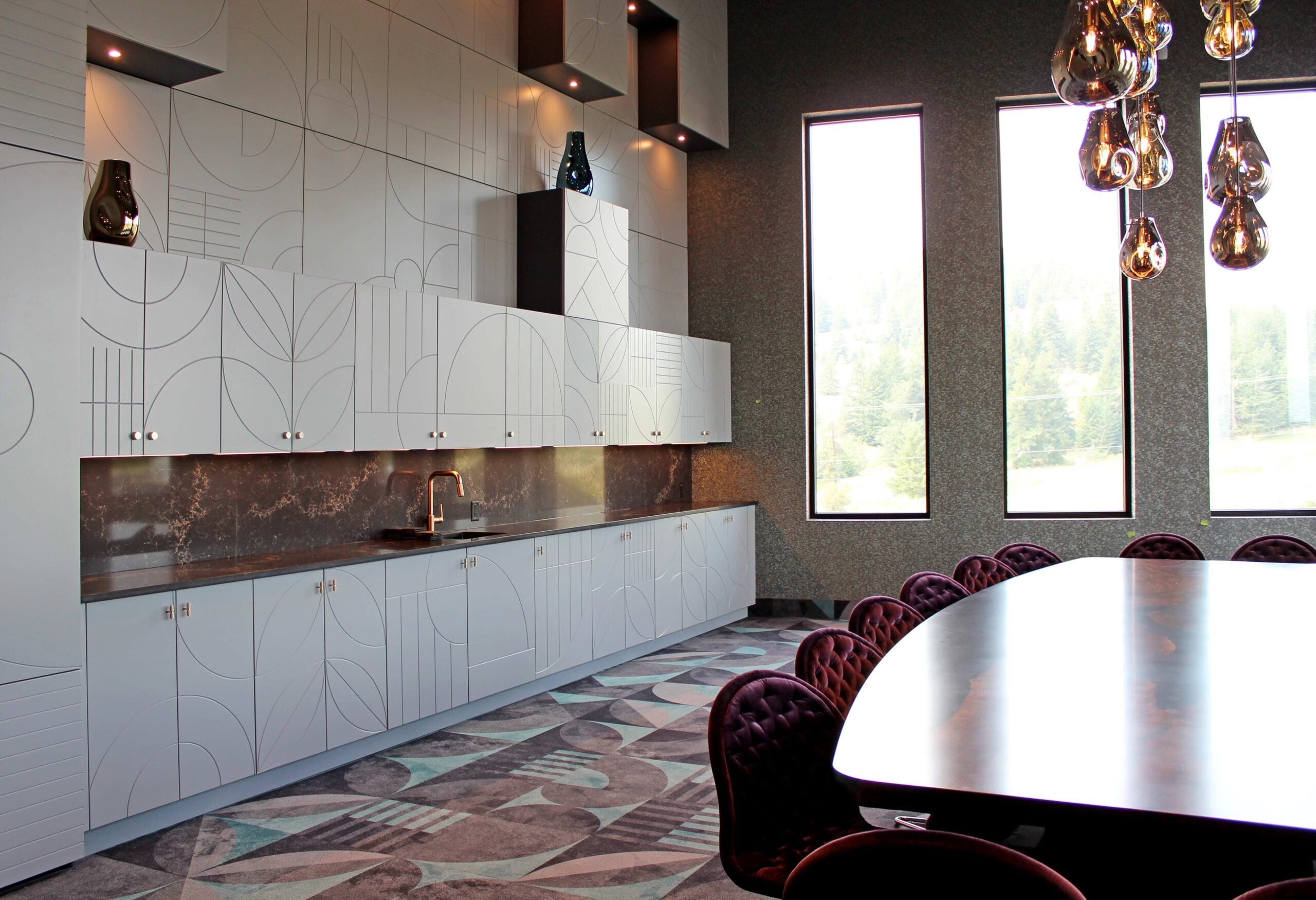
When designing or renovating a commercial space, the details matter. From office furniture and architectural elements to storage and built-in features, every component should support how your team works. But with so many options available, it can be tricky to know which solutions are right for your space.
One common question we hear at SPACESINC is: What is the difference between millwork and casework? While both words are used interchangeably, millwork and casework serve different purposes and offer distinct benefits. Understanding millwork vs. casework can help you make more informed decisions during office space planning, especially when you’re balancing functionality, aesthetics, budget, and long-term flexibility.
Whether you’re refreshing an existing workplace or starting from scratch, knowing when to choose millwork, casework, or a combination of both can help you create a space that works for your people and your business.
What Is Millwork?
Millwork generally refers to custom-made architectural woodwork or built-in elements designed specifically for a particular space. Unlike mass-produced furniture, millwork is fabricated to meet the dimensions, functions, and aesthetic goals of the project.
In a commercial workplace, millwork can include:
- Reception desks and front desks
- Built-in cabinetry
- Custom storage
- Conference room features
- Built-in shelving
- Reception and hospitality areas
- Architectural wall features
- Custom work surfaces
- Branded or decorative elements
Because millwork is highly customizable, it can become an important part of the overall workplace design. Materials, finishes, dimensions, hardware, and configurations can all be selected to complement the company’s brand and how employees use the space.
SPACESINC approaches millwork as more than a decorative feature. Our architectural and wall solutions are designed to support functionality, organization, aesthetics, and long-term performance.
What Is Casework?
Casework refers to manufactured or semi-custom cabinet and storage systems typically constructed as individual units. Rather than being custom-built for one specific location, casework often comes in standardized sizes and configurations that can be combined to meet the needs of a space.
Common examples of commercial casework include:
- Office storage cabinets
- Bookcases
- Filing and storage systems
- Break room cabinetry
- Laboratory cabinets
- Reception storage
- Workroom cabinets
- Modular shelving
Casework is often a practical choice when an organization needs reliable storage and functionality without the level of customization associated with millwork. Casework is especially useful in workplaces where flexibility, efficiency, and budget are priorities.
Millwork vs. Casework: What’s the Difference?
So, when it comes to millwork vs. casework, what sets them apart?
The biggest difference is customization. Millwork is typically designed and fabricated specifically for a project. It can accommodate unusual dimensions, architectural details, brand requirements, or highly specific functional needs. Casework, on the other hand, generally uses standardized components that can be configured to fit a variety of environments.
Here’s a simple comparison:
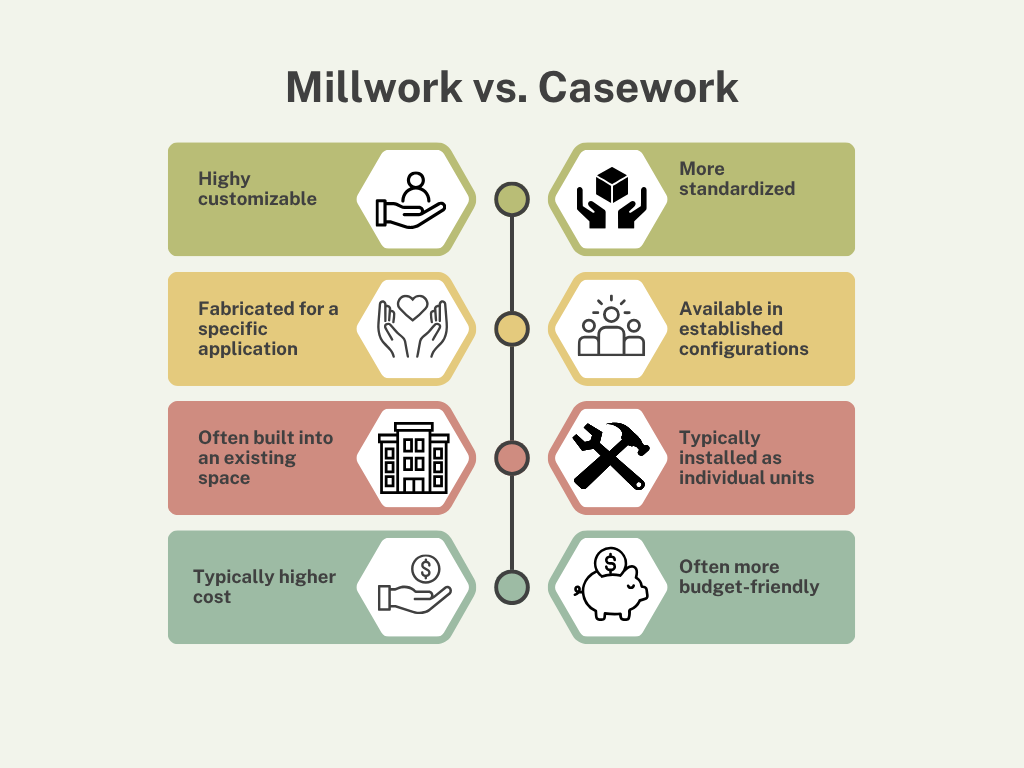
Neither option is automatically better. The right choice depends on what you’re trying to accomplish.
When Is Millwork the Right Choice?
Millwork can be a strong choice when your workplace needs a highly tailored solution. Below are some scenarios where millwork may be the best choice for your business:
You Have a Unique Space
Not every workplace has perfectly straight walls or standard dimensions. If you’re working around architectural features, unusual layouts, or specific dimensions, custom millwork can be designed to fit the space rather than forcing the space to accommodate an off-the-shelf product.
You Want a Custom Look
If a memorable first impression matters, millwork can help establish a distinctive visual identity. A custom reception desk, branded feature wall, or built-in hospitality area can reinforce your company’s aesthetic while providing a functional purpose.
You Need Specialized Functionality
Some workplaces have requirements that standard products can’t easily address. Millwork can be designed around specific equipment, technology, storage needs, workflows, or accessibility requirements.
You’re Creating a Permanent Feature
For spaces intended to remain relatively consistent over time, custom millwork can provide a polished, integrated appearance. This can be particularly effective in reception areas, executive offices, conference rooms, and client-facing environments.
When Is Casework the Right Choice?
Casework is a better fit when functionality and efficiency are the primary considerations. Below are some scenarios where casework may be your best choice:
You Need Practical Storage
If your biggest priority is adding storage, casework provides a straightforward way to organize supplies, documents, equipment, and other workplace essentials.
You Want More Standardized Solutions
Casework is often a good choice when you don’t need every cabinet or storage unit to be custom-fabricated. Standardized components can simplify planning while still providing a cohesive appearance.
You’re Working Within a Budget
One of the biggest considerations in millwork vs. casework is cost. Because casework typically relies on standardized components and manufacturing processes, it can be more economical than fully custom millwork. If you’re budgeting for workplace improvements, casework is often less expensive.
Your Workplace May Change
Today’s workplace is more flexible than ever. Hybrid schedules, growing teams, and changing departments can all affect how organizations use their space. Casework can make sense when you want functional storage without committing to a highly customized permanent installation.
Millwork vs. Casework: Which One Is Better for Your Office?
The answer depends on your workplace goals; if you’re creating a signature reception area, building custom storage around an unusual architectural feature, or designing a client-facing environment where details matter, millwork may be the better fit. However, if you’re outfitting a break room, adding general storage, or looking for a practical solution that works within an established budget, casework may make more sense.
And sometimes, the best answer isn’t millwork vs. casework – it’s both. Combining custom millwork with standardized casework allows you to create standout features where they’re needed while using practical, efficient solutions everywhere else. This approach can help you make the most of your budget without sacrificing the overall design.
How Millwork and Casework Fit Into Today’s Workplace Design Trends
Workplace design continues to move toward environments that are flexible, comfortable, intentional, and tailored to the people using them. Current office furniture trends and workplace design trends increasingly focus on creating spaces that support multiple work styles rather than giving every employee the same environment.
That means storage and built-in elements need to do more than simply fill a wall. For example, a reception area might need to welcome visitors while incorporating storage and technology. A collaboration space may require integrated surfaces and organization. A break room may need cabinetry that supports both functionality and employee experience.
Instead of selecting millwork or casework after the layout has already been determined, consider how these elements fit into the workplace from the beginning. Their placement can affect circulation, storage capacity, collaboration, privacy, and the overall flow of the office.
At SPACESINC, the goal is to create intentional interiors that support how people work today while remaining prepared for what’s next. Their approach combines furniture, architectural solutions, specialty products, and fulfillment solutions to create cohesive workplace environments.
Create a Workplace That Works for Your Company
Understanding millwork vs. casework is a great starting point, but choosing the right solution requires looking at the bigger picture. The right combination of custom and standardized elements can improve functionality, support your workplace design goals, and create an environment that feels intentional from the moment someone walks through the door. Whether you’re planning a new office, refreshing an existing space, or preparing for what’s next, SPACESINC can help you evaluate your options and create a workplace tailored to your people, goals, and budget. Explore SPACESINC’s office furniture solutions, or connect with the SPACESINC team to start planning your next workplace project!